

Old Pershyttan’s mountain village offers visitors the opportunity to see and understand the connection between natural resources such as ore, forest and running water, and the production of iron in the smeltery.
In 2004 Pershyttan became nominated as a Cultural Reserve. Pershyttan is Sweden’s best-preserved mountain village.
Veteranjärnvägen The veteran railway between Pershyttan and Nora station offers proximity to the wooden town of Nora. Together they create a genuinely original place with deep roots, where things are all close at hand. The Visitor’s Centre is always open and there is a permanent exhibition relating the history of ore mining. Here outdoor activities meet industrial history both above and below ground. In the past the area was dominated by hard manual labour. Today adventures are offered in Lockgruvan mine, in the smeltery, in the museum, in the surroundings or on the more than 220 km long MTB-trails in the area. Read more about the MTB trails on www.bergslagencycling.com
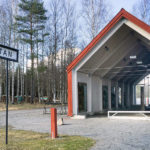

You can wander around Old Pershyttan’s mountain village any time of year. The premises are open at certain times during the summer. Then there is access to both the upstairs and downstairs in the smeltery, the water wheel/barge and the water-powered game, game house, Futten warm cabin, the Coal house and the Museum are also open.
Explore Old Pershyttan’s mountain village on your own
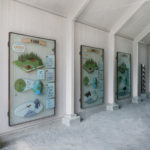
You can explore the mountain village’s buildings and environs on your own. If you are interested, you can pick up a Pershytte-folder at the Tourist Office in the station building or at the Visitor’s Centre in Pershyttan. The Visitor’s Centre is always open and there is an exhibition on the mining industry.
Guided tours of Old Pershyttan’s mountain village
We offer guided tours daily in summer. Learn more about iron production and see the water-wheel, iron works, slag heaps, miner’s cabins and smeltery.
Assembly point: Visitor’s Centre in Pershyttan.
Tickets are available to buy over the counter at the Tourist Office in the station building or via www.nortic.se
Open for group bookings (May-October) via Nora Tourist Office
Tel: +46(0)587 81120
Read more on www.visitnora.se
Guided tours of Lockgruvan Mine, Pershyttan
We offer guided tours daily in summer. Experience Lockgruvan mine’s mountain cavern 40 meters underground. Hear about how mining was carried out in times gone by and feel the atmosphere in the cavern. The age limit for joining the tour down into the mine is three years old. Children under twelve may only join if they are accompanied by an adult.
Assembly point: Visitor’s Centre in Pershyttan.
Tickets are available to buy over the counter in the Tourist Office in the station building or via www.nortic.se
Open for group bookings (May-October) via Nora Tourist Office
Tel: +46(0)587 81120
Nature and Culture trails in Pershyttan
The Village Association has worked to prepare a Nature and Culture trail in Pershyttan. An excellent walk of six kilometers, or as long as you want or feel for. An information board and folders are available directly to the right of the entrance to the Visitor’s Centre.
Support us
With your help we can preserve a unique part of Pershyttan’s history. Join us and make a difference!

Accessibility and WCs

 Wheelchair Accessible WC is located by the Visitor’s Centre, Pershyttan.
 The Hyttstigan Trail and Visitor’s Centre in Pershyttan are both wheelchair accessible.
The Gruvstigen Mine Trail, and the Nature and Culture Trail in Pershyttan are NOT accessible with wheelchairs or walking frames.
Old Pershyttan’s mountain village is a unique memorial from Bergslagen’s heyday. Iron has been produced here since the middle ages and the mines belong to the oldest in Bergslagen. During the middle ages blast furnace technology was developed and it was then that the mining of rock ore began. The village grew up around the mine and downstream by the waterside. The miners lived closest to the mine. Their manor-like farms from the 18th and 19th centuries speak of wealth and status. Mine workers and coal workers lived in small crofts on the outskirts of the village, and further down by the stream 19th and 20th century buildings were established.
The importance of Water
It was the stream that dictated where the mill should be built. Running water was utilised at every point. Huge water wheels spun and powered bellows in the mine and shafts, which pumped the mine shafts dry of ground water. Mills and saws also got their power from the stream. The water flow was tamed and regulated with the help of dams and canals. All of these things, together with the surrounding landscape, tell the story of how coal mining and quarrying affected the countryside from the middle ages until the middle of the 1900s, when production was shut down for good.